Trying Period Underwear for the First Time
11,000. That’s an average estimate for the number of single-use menstrual products that people with periods use in their lifetime. That’s a lot. From an environmental perspective, this leads to a vast amount of menstrual products containing harmful microplastics reaching the oceans and land – having a deeply negative impact on wildlife. Period products are even the 5th most common single-use plastic item found on beaches in Europe. Although the likes of period underwear are starting to be used more, single-use products are widely used.
For humans too, single-use products are likewise damaging as we are having to expose our bodies to the harmful toxins and chemicals used in the production of many single-use menstrual products. The Women’s Environmental Network (WEN) research shows that menstrual pads can contain up to 90% plastic. On top of all this, the overall lifetime cost of buying single-use period products soon racks up, an average of £5000 in fact, with period poverty an ongoing issue.
Single-use menstrual products are neither people nor planet-friendly.
Seeking a sustainable period? Why now is the best time.
When it comes to taking action to have more sustainable periods both for you and the earth, now is the time.
More and more eco-friendly alternatives are coming on the market. Although some may seem more expensive than your standard pack of Always or Tampax at the supermarket, the costs are simply representative of the fact that many eco-friendly options are reusable, which saves you constantly having to stock up at the shops.
You want to feel comfortable when you are on your period. Understandably, people have different menstrual products of choice. So what kinds of sustainable period alternatives are there?
Menstrual cups
MoonCup. OrganiCup. Names ringing a bell? These are a couple of many menstrual cup brands which have come onto the scene over the past couple of decades. Rather than absorbing blood like standard tampons or sanitary towels, menstrual cups collect it, meaning you can clean and reuse them, even for 10 years!
Reusable sanitary pads
If you’re like me and prefer pads during your period, reusable sanitary towels could be the menstrual product. These are made of layers of absorbent cloth and can be washed and reused.
Single-use biodegradable pads and tampons
Of course, there are moments when single-use products could be needed. They can be useful handbag essentials or an easier option for travelling. Even if you are on it with your cycle tracking, there are still times when you can get caught out and having a few single-use products to hand is always worth considering, just in case.
The good thing is that there are better single-use options available now. In 2021, I was able to collaborate (ad – previous PR product) with Yoppie, a brand selling biodegradable single-use pads and tampons. Yes, biodegradable. We don’t want you plastic. Everything is made from 100% organic cotton and is free of plastics, fragrances, dyes, synthetic fibres and chemical additives.
It’s becoming apparent that period products don’t have to be as detrimental to the planet.
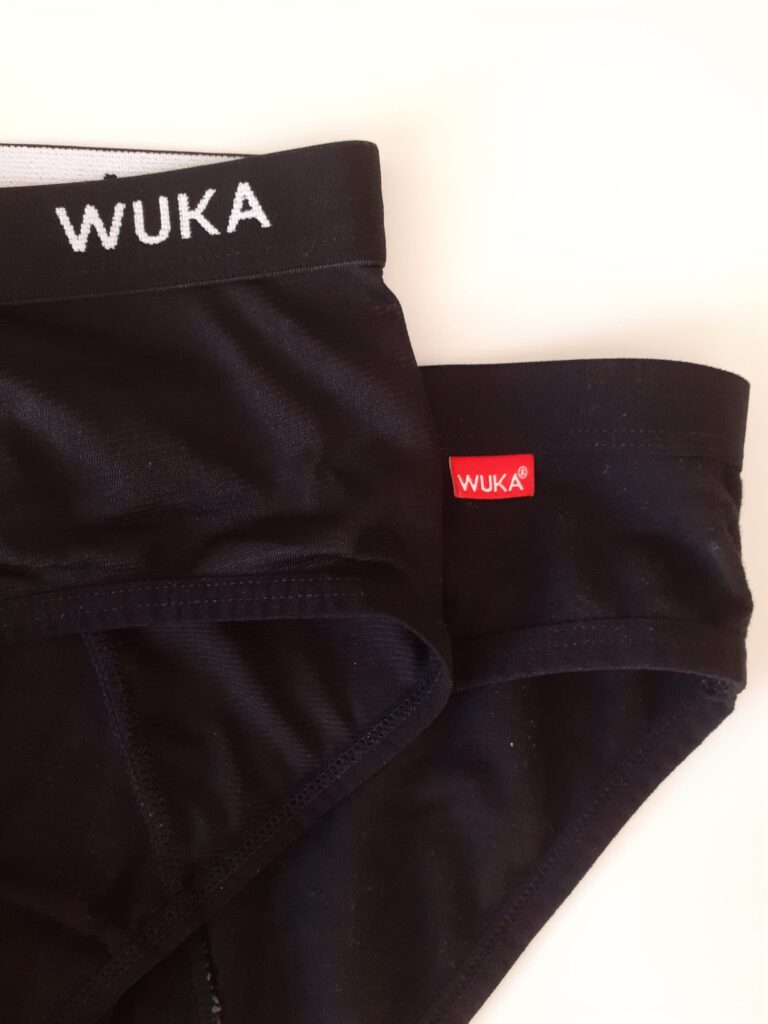
Trying period underwear for the first time
There’s one that still needs mentioning. Period underwear. I recently bought my first couple of pairs and wanted to share my thoughts…because I love them!
I chose to buy from Wuka, simply because they were a brand I’d come across frequently and had recommendations from others.
Since my IBD diagnosis, I have found I am prone to heavier periods. For this reason, I decided to buy the Ultimate Midi Brief designed for heavy flows (absorbs 20ml+ period blood/4 tampons’ worth).
When I bought them, Wuka were also doing a special offer over the Amazon Prime Day sale, offering an additional Basics Hipster Medium Flow pair (absorbs 15ml of period flow or light leaks/2-3 tampons’ worth) with any purchase as part of the Better Than Prime campaign and to thank customers for choosing to support small, ethical businesses.
Sizing-wise, I followed the instructions on the Wuka size guide and was happy with the fit.
One of the biggest differences I noticed was the comfort level. There was no worrying about whether sanitary towels had shifted or anything like that.
It was odd at first not having to add a pad to the underwear because that had just become something I would do on autopilot during my period. This feeling didn’t last long though and I just felt far more comfortable.
I didn’t experience any issues with leaking or odour either. I wore the Midi Brief during the night too and after a good 8+ hours, there were no issues.
Cleaning-wise they were equally impressive. I followed the instructions to wash at 40 and was able to do that with a normal washload. One thing to note is that you do need to let them air dry, as tumble drying can cause period underwear to lose its shape and effectiveness.
The final verdict?
Period underwear has certainly gained a new fan in me. That, and biodegradable pads, are my menstrual products of choice.
Have you switched to a sustainable period alternative? If you haven’t, is there something holding you back from doing so?